Midnight Messages and Weekend Warnings: How Licensed Canadian Online Pharmacies Handle After-Hours Requests

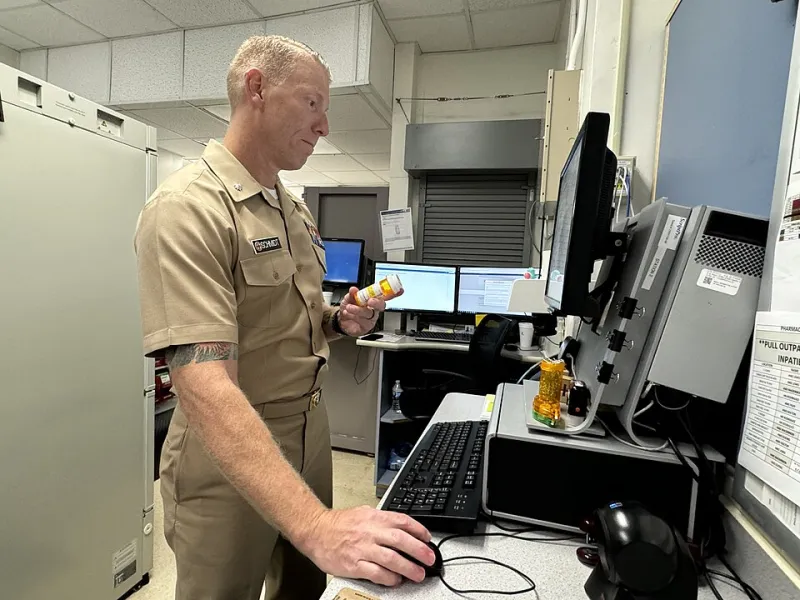
Photo: pharmacist working late night computer pharmacy, via ajp.com.au
It is 12:40 a.m. on a Tuesday in Winnipeg. A patient realises she never took her evening dose of a blood pressure medication, and her pharmacy's website is the only resource open. She types her question into the secure messaging portal and wonders: is anyone actually reading this?
For patients of a licensed Canadian online pharmacy, the answer is more structured than most realise. Understanding what happens after you hit send — and what the system cannot do — is essential to using these services safely.
The First Hour: Triage, Not Treatment
Messages submitted through a legitimate online pharmacy portal do not sit untouched until the morning shift arrives. Reputable operations route every submission through an automated triage layer that scans for red-flag language: words suggesting chest pain, difficulty breathing, suicidal ideation, or severe allergic reaction trigger immediate prompts directing the patient to call 911 or contact a poison control centre.
Messages that pass this screen are queued by urgency. A question about a missed dose of a statin can typically wait until morning; a missed dose of insulin, an anticoagulant, or an anti-seizure medication may be escalated to the pharmacist on call. This is why the portal asks you to categorise your request — the triage system is only as effective as the information you provide.
Scenario One: The Missed Dose at Midnight
Consider the Winnipeg patient above. Her message is received, triaged as routine, and answered by a pharmacist reviewing the case at 7:15 a.m. For most once-daily medications, the guidance is consistent: take the dose when remembered unless it is nearly time for the next one, and never double up. Her blood pressure pill falls squarely into this category, and a delayed morning reply poses no clinical risk.
But the same question about a different drug — say, a thyroid medication or an immunosuppressant — carries different timing rules. This is precisely why patients should never rely on general internet advice at odd hours. A licensed Canadian pharmacy's response, even if it arrives at dawn, is grounded in your actual prescription record.
Scenario Two: The Long Weekend Interaction Scare
Now imagine a patient in Nova Scotia on the August Civic Holiday who has started a new antibiotic and notices her heart racing after taking it alongside an over-the-counter antihistamine. She suspects an interaction and messages her online pharmacy at 9 p.m. on a Sunday.
Here, escalation protocols matter. Suspected drug interactions are classified as time-sensitive, and many licensed online pharmacies maintain pharmacist coverage or on-call arrangements for exactly these situations — a reality reinforced by provincial standards requiring pharmacies to have mechanisms for urgent patient contact. If no on-call pharmacist is available, the messaging system should direct the patient to HealthLine 811 services (or their provincial equivalent), walk-in clinics, or emergency departments.
The key distinction: a digital message is appropriate for questions that can wait hours. Symptoms in progress — an active reaction, not a worry about one — require a human being in real time, whether that is 811, a telehealth physician, or an emergency room.
What Automated Refill Systems Do While You Sleep
Much of the overnight activity at an online pharmacy involves no human at all. Automated refill engines review prescription records against renewal windows, flag prescriptions approaching expiry, and generate pharmacist work queues for the morning. If your maintenance medication is due and your prescriber's renewal is outstanding, the system may already have alerted the pharmacy team before you noticed your bottle was empty.
This is also why patients sometimes receive an unexpected morning call. An automated flag for duplicate therapy, an abnormal refill interval, or a controlled-substance renewal request requires pharmacist review before anything ships. The delay is not inefficiency; it is the safety architecture working as designed.
Knowing Your Escalation Ladder
A practical rule for Canadian patients using online pharmacy services:
- Digital message: routine questions, refill logistics, non-urgent timing questions, cost inquiries.
- Provincial health line (811 in most provinces): symptom questions needing same-hour guidance when your pharmacy is closed.
- Walk-in clinic or telehealth: suspected but non-emergency adverse effects needing assessment.
- 911 or emergency department: chest pain, breathing difficulty, anaphylaxis signs, overdose concerns, or any suspected serious interaction with active symptoms.
The Takeaway
After-hours messaging at a licensed Canadian online pharmacy is not a novelty service — it is a triage system with defined limits. Use it for the questions it was built to answer, respect its escalation prompts, and keep the emergency ladder in mind. The pharmacist who answers at 7:15 a.m. is part of a system designed so that nothing truly urgent waits until morning.